
The Rise of Modeling in Digital Marketing
Digital marketing has traditionally hinged on third-party cookies to track user behavior across various sites. However, with new privacy regulations and technologies, like Apple’s, reshaping the internet landscape, third-party cookies are now blocked in browsers such as Safari and Firefox. Additionally, first-party cookies, which track users on your site, are limited to a mere 7 days in Safari. Coupled with the increasing use of ad blockers and users’ reluctance to consent to tracking, we face a unique challenge.
The once reliable methods of measuring digital marketing effectiveness are faltering. We can no longer understand customer behavior as we did. In response, platforms like Google and Meta are embracing modelling to bridge these gaps.
Understanding Conversion Data: Observed vs. Modeled
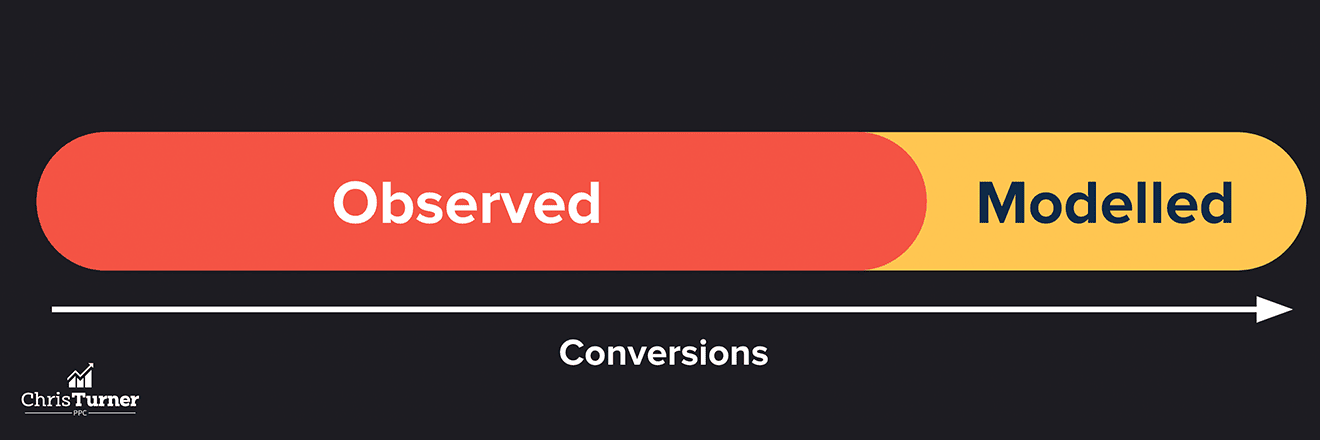
In this new scenario, we distinguish between two types of conversion data within the ad platforms:
- Observed Conversions: These are the reliable conversions, based on deterministic signals—direct data points confirming a user’s action.
- Modelled Conversions: These are less clear-cut. They’re not direct observations but rather estimates, crafted from complex algorithms and models by platforms such as Google and Meta
This heavy reliance on modelled data brings forth significant concerns regarding accuracy and transparency.
The Big Question: Can You Trust the Data?
This paradigm shift to modeling opens up a critical question: How reliable is this estimated data? While these models are necessary, they often exist as a ‘black-box’, controlled by major platforms and lacking transparency, not open to external review.
For businesses, this obscurity can be daunting. Making decisions based on potentially inaccurate data is risky, and biases within these models could misguide your business strategy.
Moreover, the issue of accountability arises. Should media platforms have the autonomy to “mark their own homework”? That is, can we trust these platforms to self-regulate and provide unbiased, accurate modeling data?
Looking Ahead: The Future of Digital Marketing in a Privacy-Centric World
With privacy regulations likely to become even stricter, modeling is set to play a critical role in future digital marketing campaigns. Marketers and businesses must stay vigilant and critical of the challenges posed by these models.
Despite these obstacles, opportunities abound for businesses to excel:
- Diversify Strategies: Don’t solely depend on modeled data. Blend observed data, modeled data, and other marketing strategies. Prioritize your first-party data—it’s now more valuable than ever. Base decisions on a reliable subset of data, and avoid over-reliance on attribution technologies for a clear picture.
- Stay Informed: Keep abreast of the latest developments in privacy legislation and digital marketing technologies. The industry is moving rapidly, with platforms launching new tools in response to privacy advancements. Google Ads’ Enhanced Conversions and Meta’s Conversions API (CAPI) are prime examples of how businesses can maximize output with minimal data.
- Adapt and Innovate: Be ready to continuously adapt your strategies to align with the evolving digital marketing ecosystem. Proactively responding to privacy tech developments, rather than reacting post-adoption, can provide a competitive edge.
Navigating the complex and challenging future of digital marketing requires a balance of innovation and integrity. As we venture into this new landscape, the key will be to ensure that our pursuit of marketing success is rooted in ethical practices and transparency.